
US broker checks, SIPC protection and complaint routes
Disclaimer: For educational purposes only, not investment advice. You are responsible for your investment decisions.
How can you check whether a US stockbroker is properly registered? Who should you contact about an unauthorised trade? If the broker fails, who handles the return of the shares and cash in your account?
These questions involve different organisations and procedures. The SEC regulates securities markets, FINRA oversees its member brokers, and SIPC helps protect eligible customers' assets when a member broker fails. For futures and other derivatives, you also need to understand the CFTC's remit.
This article explains their roles, how to check a broker, what SIPC's $500,000 limit means, and which channel to use when a problem arises. The rules discussed were checked as of 31 October 2026. All dollar amounts are in US dollars.
1. What do the SEC, FINRA, SIPC and CFTC do?
Here is how each organisation relates to individual investors:
| Organisation | Role and responsibilities | How investors can use it |
|---|---|---|
| Securities and Exchange Commission (SEC) | Federal securities regulator responsible for securities markets, disclosure requirements and related enforcement | Read company filings, understand securities rules, and report relevant concerns or complaints |
| Financial Industry Regulatory Authority (FINRA) | Self-regulatory organisation supervised by the SEC; oversees its member brokers and associated persons | Check brokers' backgrounds, submit complaints about member firms, and learn about arbitration and mediation |
| Securities Investor Protection Corporation (SIPC) | Non-profit organisation established by law to help return customer assets in qualifying member-broker liquidations | Check membership and file customer claims as required in a customer-protection liquidation |
| Commodity Futures Trading Commission (CFTC) | Federal derivatives regulator overseeing markets including futures, options on futures and swaps | Check the applicable regulatory requirements and complaint channels for these products |
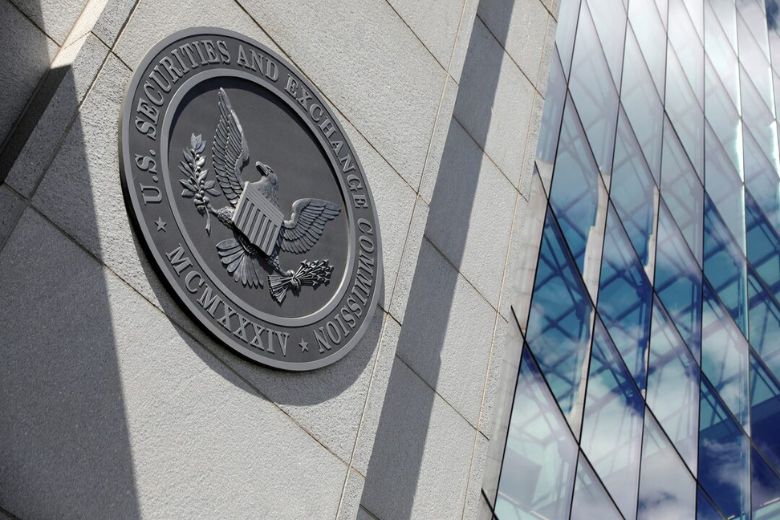
The SEC's responsibilities include protecting investors, maintaining fair and orderly markets, and facilitating capital formation. FINRA carries out self-regulation under SEC oversight; it is not a government agency. See the SEC's overview and FINRA's introduction.
SIPC focuses on recovering customers' cash and securities when a broker runs into financial trouble. It does not carry out day-to-day broker regulation. See SIPC's mission statement.
If you trade both shares and futures, check the regulatory arrangements for each product. The CFTC primarily oversees US derivatives markets, as explained in its overview.
The useful distinction is: Are you checking a broker's status, questioning its conduct, or seeking the return of assets in a liquidation?
2. How to check the companies behind your brokerage account
Identify the legal entity before checking registration
A broker's brand, trading app and the company named in your account agreement may have different names. The same brand may also provide services through different companies in different countries or regions.
Start with your account agreement, statements or other official customer documents. Identify:
- The full legal name of the company you contract with;
- The company holding your account's cash and securities;
- The registration numbers listed and the responsibilities of any introducing broker, clearing broker or other firm involved.
Use those details to search official databases, rather than relying on the brand's abbreviated name.
FINRA's BrokerCheck shows a broker's or registered representative's registration status, business background, and publicly disclosed regulatory and dispute information. Match the company name and registration number against your customer documents.
If the company name matches but the website, contact details or business arrangements do not, verify them through the official contact channels in the search results. Finding a registered company with the same name does not, by itself, prove that it operates the app or website you are using.
Check SIPC membership separately
After checking securities registration, confirm whether the relevant company is a SIPC member. These checks answer different questions:
| What to check | What it tells you |
|---|---|
| Broker registration and public records | In what capacity does the company conduct securities business, and what has it publicly disclosed? |
| SIPC membership | Is the company a SIPC member, and might the relevant customer assets qualify for its protection process? |
| Account-opening and custody documents | Which companies actually service your account, and who holds the cash and securities? |
Use the member search on SIPC's website to check the company's name. Search for the legal entity named in your customer documents rather than relying on a logo displayed on a website.
Non-US residents need to check the account arrangements too
SIPC states that eligible customers do not have to be US citizens or residents. Non-US customers with accounts at its member brokers are generally treated under the same rules. See what SIPC protects.
If your contract is with a broker outside the US, also check the custody arrangements. An overseas broker may hold customer assets through a US SIPC member. If that US member enters a customer-protection liquidation, some arrangements may allow protection to pass through to the underlying customers. Eligibility depends on the account structure, customer status and legal requirements. See SIPC's investor FAQs.
The practical questions are: Who is your contracting firm, who holds your assets, and how does SIPC protection apply to those arrangements?
3. What does SIPC protect, and how does the $500,000 limit work?

Distinguish missing assets from investment losses
SIPC primarily addresses situations in which a member broker encounters financial trouble and cannot return all the cash or securities owed to its customers.
For example:
- Your account should hold 100 shares, but a securities shortfall is discovered during liquidation. This concerns the return of customer assets.
- You still hold all 100 shares, but the price falls from $50 to $30 per share. This is a decline in market value.
These situations are treated differently. The SEC's SIPC basics bulletin explains that SIPC may provide advances to cover eligible customer-asset shortfalls, but does not compensate investors for falls in the market price of securities.
Eligible securities, such as shares, bonds and funds, and customer cash held in connection with securities transactions may qualify. Whether a particular asset qualifies depends on SIPC's rules.
The $500,000 total includes a $250,000 cash limit
SIPC may advance up to $500,000 for each eligible customer, including no more than $250,000 for cash claims.
Advances for securities and cash combined: up to $500,000;
Within that total, advances for cash: up to $250,000.
The limit is not $500,000 for securities plus another $250,000 for cash.
The hypothetical figures below illustrate only the statutory advance limits. Assume that all claimed shortfalls have been accepted and that both the customers and assets qualify. Ignore subsequent asset recoveries and other factors for this calculation:
| Hypothetical case | Securities shortfall | Cash shortfall | Maximum SIPC advance based on the limits alone |
|---|---|---|---|
| Case A | $400,000 | $100,000 | $500,000 in total |
| Case B | $100,000 | $400,000 | $350,000 in total, including up to $250,000 for cash |
Case B also has a total shortfall of $500,000, but its cash component is subject to the $250,000 limit:
$100,000 securities shortfall + $250,000 cash limit = $350,000
This illustrates the limits; it does not predict an actual liquidation outcome. Claims and advances must be determined under the law. The final amount recovered also depends on factors such as the customer property recovered and distributed during liquidation.
Holding more than $500,000 does not mean the excess is lost
Suppose your account holds shares worth $800,000, and those shares can all be identified and returned during the broker's liquidation.
These are your existing securities being returned. A $500,000 protection limit does not mean that only $500,000 of them can be returned. Their market value will still fluctuate after they are returned.
Returning customer assets and using SIPC advances to cover shortfalls are related but distinct parts of the process. SIPC's FAQs explain that eligible customers may share in the distribution of customer property collected by the trustee. SIPC advances may then be used as needed, subject to the statutory conditions and limits.
First establish whether the assets are intact and how much can be returned. Then consider any remaining shortfall and the applicable limits.
Does opening more accounts increase protection?
You cannot calculate protection by account count alone.
SIPC uses the concept of "separate capacity" to determine whether accounts qualify for separate protection. Accounts held in the same capacity may have to be combined when applying the limits. See SIPC's guidance on multiple accounts.
For example, opening two ordinary individual accounts in your own name at the same broker does not, by itself, give you two separate $500,000 limits.
What matters is the legal capacity in which the accounts are held and the applicable rules, rather than how many accounts you open.
4. Who should you contact about a dispute or broker failure?
Document the problem and the evidence
If you discover an unauthorised trade, inconsistent asset records or another account problem, notify the broker promptly through a formal channel and keep a written record.
Gather at least the following:
- Account statements and trade confirmations;
- The securities, quantities, amounts and dates involved;
- What you authorised, and which trades or actions you did not authorise;
- Correspondence with customer service, your broker or the compliance department;
- The specific issues you want investigated or corrected.
Instead of simply writing "I think something is wrong with my account", give a specific description, such as:
I did not place this sell order, but my account shows a sale of 100 shares on [date]. Please check the order's origin, the authorisation records and the execution details, and provide a written response explaining the outcome.
This helps the firm identify the issue and creates a clearer record for any subsequent complaint or dispute.
Complaints, arbitration and mediation serve different purposes
For a problem involving a FINRA member broker, choose the complaint or dispute-resolution channel that fits the issue:
| Channel | Main purpose |
|---|---|
| Complaint to the broker | Ask the firm to investigate the account, explain what happened and correct specific problems |
| Complaint or report to FINRA or the SEC | Report possible misconduct or evidence of securities-law violations |
| Arbitration | An arbitration panel decides the dispute based on the parties' claims and evidence |
| Mediation | A mediator helps the parties negotiate; the parties decide whether to settle |
FINRA's investor complaint page lets you report relevant concerns. To pursue a compensation dispute, you also need to understand the applicable arbitration, mediation or court procedures.
Filing a regulatory complaint does not mean you have filed an arbitration claim. FINRA's dispute-resolution guide distinguishes a complaint from a separate arbitration or mediation case.
If your aim is to recover a specific sum, check your account agreement, dispute-resolution terms and applicable deadlines as well. Do not simply wait for the regulatory complaint's outcome.
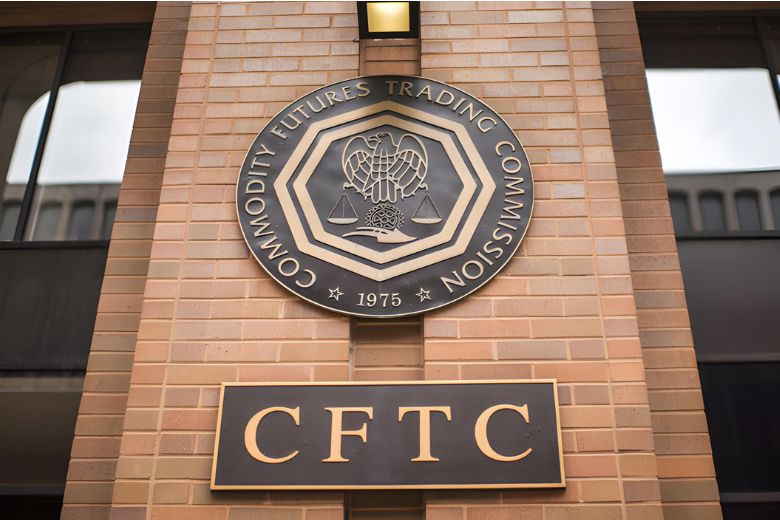
For issues involving futures or other CFTC-regulated products, use its tips and complaints page to identify the appropriate channel, rather than assuming that the process for a stock account applies.
Follow the liquidation notice when filing a customer claim
If a broker enters a SIPC customer-protection proceeding, use official information from SIPC and the liquidation trustee to confirm how to file, what documents are required and the deadlines.
A claim generally covers the cash and securities the broker owed you on the relevant determination date, as well as any money you owed the broker. Account statements, trade confirmations and correspondence may support your claim.
The SEC's guide to filing a SIPC claim explains the different deadlines and their effects. Use the dates specified in the notice for the particular case and file promptly.
You need the liquidation case details and its customer-claim process. An ordinary complaint does not replace a liquidation claim.
5. Lehman: protecting brokerage customer assets is different from protecting every Lehman investment
The Lehman case shows why the legal entity and the type of asset matter.

Lehman-themed illustration, not a news photograph of the event.
Lehman Brothers Holdings Inc., the holding company, filed for bankruptcy protection on 15 September 2008. Its US brokerage entity, Lehman Brothers Inc., entered a customer-protection liquidation under the Securities Investor Protection Act (SIPA) on 19 September. See SIPC's 2008 annual report.
For brokerage customers, the issue was how their cash and securities would be transferred, claimed and returned. Investors holding Lehman's own shares or bonds had rights tied to those securities and the corresponding bankruptcy proceedings.
According to SIPC's 2022 announcement closing the US brokerage liquidation, the liquidation lasted 14 years and all allowed customer claims were ultimately satisfied in full. Most customer claims had been resolved within weeks of the liquidation beginning.
The announcement also states that no government or SIPC funds were used to achieve that result. Transfers, recoveries and distributions of customer assets were important sources of the property returned in the case.
The case offers two practical lessons: Identify the specific brokerage entity behind your account, and distinguish the return of assets held in custody from changes in the value of the investments themselves.